Sound Healing Guide


What Is Sound Healing?


Therapeutic Tools
Session Guide
Suitability
Learn more about the therapeutic power of sound
Introducing the instruments used in my healing sessions
Find out how you will feel and how often you should attend
Helpful guidance to ensure sound healing is right for you
What is Sound Healing?
The importance of silence
Silence is as healing as sound. It gives the body space to integrate, settle and absorb the shifts taking place.
The moments of stillness between the sounds are where deep transformation often happens – where the nervous system softens and the body’s natural healing mechanisms awaken.
Background music is not used during my sessions, so the body can receive the full benefit of the frequencies being created.
The role of intention
Sound carries intention. The thoughts, feelings and purpose behind the sound influence how it is received. When sound is offered with clarity, compassion and a healing intention, its effect is amplified. This is why intention‑setting is woven gently into your session.
“It is not only the frequency of the sound that creates the effect, it is also the intention of the person making and receiving the sound that causes the outcome”
– Jonathan Goldman
Introduction
Sound healing is a gentle therapeutic practice that uses calming sound frequencies to bring the mind, body and energy system back into harmony. For thousands of years, cultures around the world have used sound as a way to soothe the nervous system, ease emotional tension and support the body’s natural healing processes.
During a session, sound is created through instruments such as singing bowls, gongs, chimes, drums and voice. These vibrations travel through the body, helping you shift out of stress and into a state of deep rest, clarity and balance.
Everything is vibration
The human body is a complex vibratory system – every organ, bone and cell has its own natural frequency. Together they make up a composite frequency, like the instruments of an orchestra. When life becomes overwhelming, parts of the body can fall out of harmony, creating tension, fatigue or emotional imbalance.
Sound healing helps gently “retune” these areas by introducing soothing frequencies that support the body in returning to its natural rhythm.
How sound brings the body back into balance
One of the key principles of sound healing is entrainment – the way one vibration naturally synchronises with another. When you’re stressed or out of balance, your body’s rhythms can lock into the steady, calming frequencies of the instruments, helping you shift into a slower, more peaceful state.
People often experience this energetic shift as: sensations; colours or imagery; emotional release; clarity; deep relaxation. Your body receives exactly what it needs.
Harmonics and altered states of rest
Many of the instruments used in sound healing are rich in overtones – subtle layers of sound that naturally slow the brainwaves.
This guides you into a dreamlike, meditative state where: the breath softens; the heart rate slows; stress hormones reduce; the immune system can function more efficiently. It’s a deeply restorative state that the body rarely reaches in everyday life.
Sound as musical medicine
Different combinations of tones – known as intervals – have different effects on the body and emotions. Some feel soothing and balancing, while others help shift stagnant energy or bring buried emotions to the surface.
These intervals act like musical medicine, helping the body return to its natural harmonic rhythm.
Therapeutic Tools
Learn more about the instruments used in my healing sessions
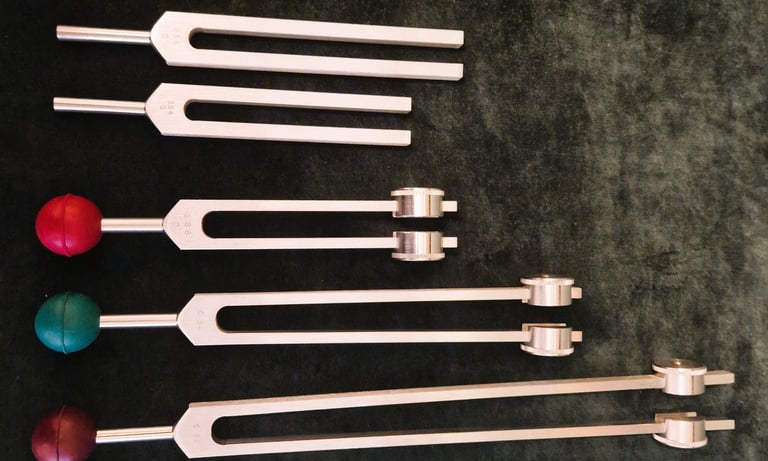
Tuning Forks
Biosonics tuning forks support both energetic and physical healing. C & G forks create the perfect fifth – a calming, harmonious interval that restores balance and clears the aura. Otto forks are applied directly to the body to ease pain, release tension, and promote grounding.
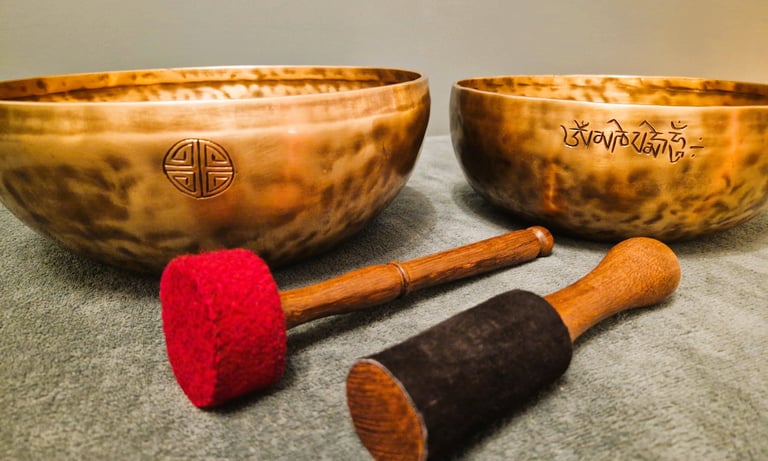
Himalayan Bowls
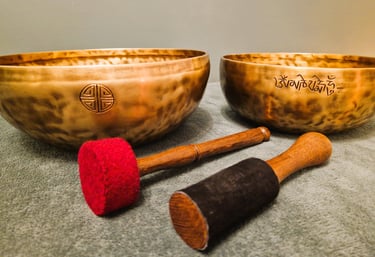
Full‑moon Himalayan bowls create rich, soothing tones that invite deep tranquillity. Their harmonics help calm the nervous system and are supportive for those navigating emotional challenges. Bowls placed directly on the body offer a deeper sonic massage.
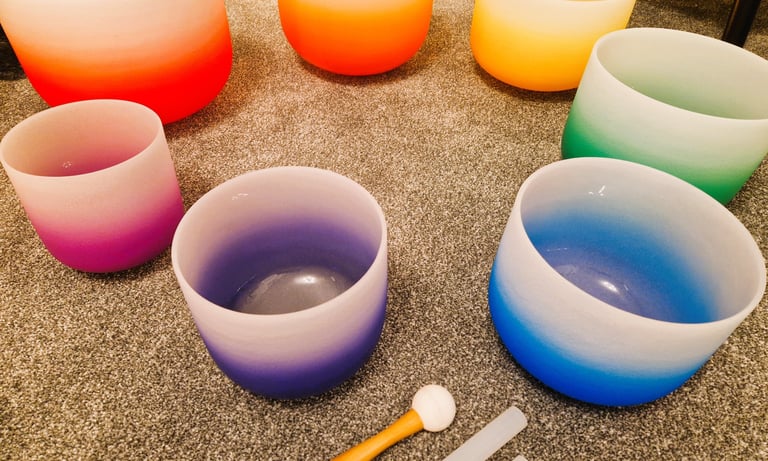
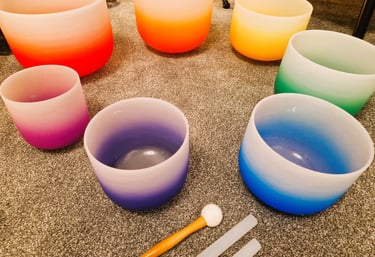
432Hz quartz crystal bowls and harp are tuned to the body’s chakra centres, offering pure, expansive tones that are deeply cleansing. These instruments can bring profound clarity and transformation, though their intensity may feel strong during emotionally sensitive periods.
Crystal Bowls, Bell & Harp
Gongs
Reiki Drum
Other Therapeutic Percussion
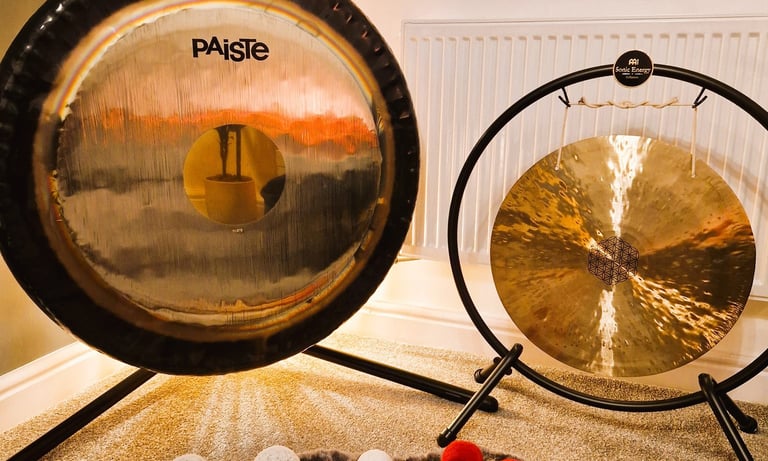
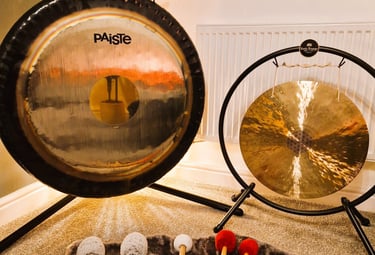
A Paiste symphonic gong and Meinl Flower of Life wind gong create powerful, layered harmonics connected to the primordial sound of OM. Their expansive, ethereal tones resonate through the whole body, calming the mind and supporting deep physical and energetic healing.
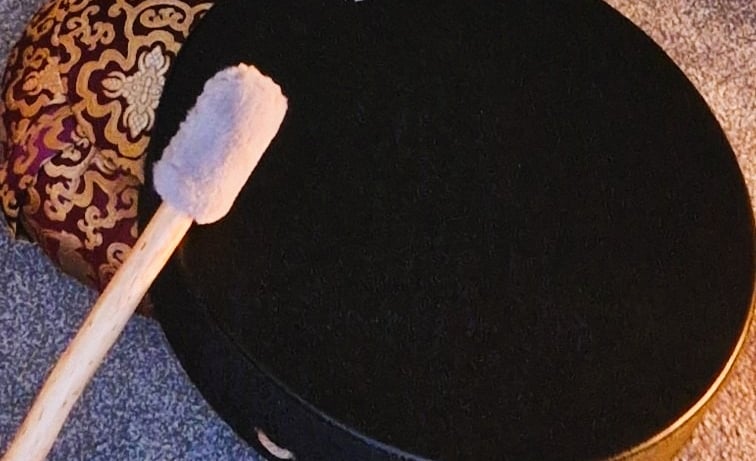
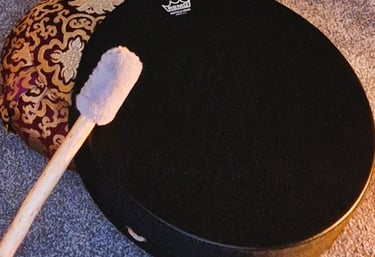
Reiki Drum blends Reiki energy with steady, rhythmic drumming to support deep healing, energetic release, and inner journeying. The grounding beat guides the mind into meditative states while the flow of Reiki helps the body unwind and return to balance.
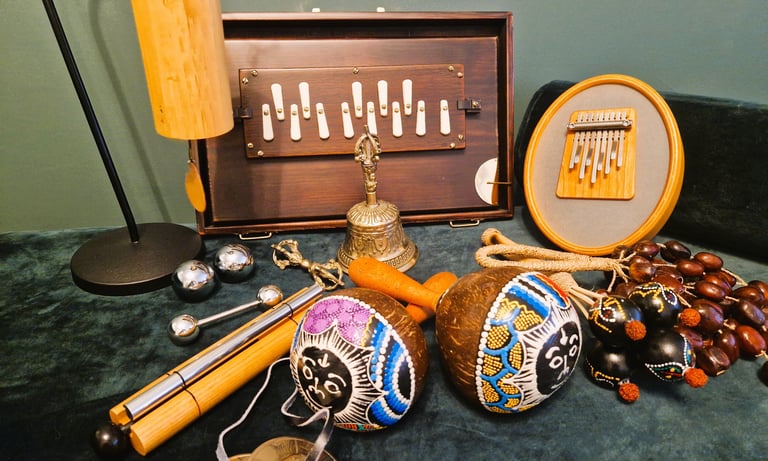
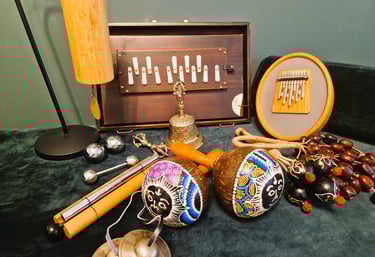
Percussion instruments are woven into sessions to support grounding, transitions, and energetic release. Melodic tools bring lightness and uplift. Nature-inspired tools offer earthy grounding and a cleansing effect. The Shruti box provides a steady hypnotic drone that deepens relaxation.
Session guide
What is the difference between a one-to-one and group sound healing session?
One-to-one sessions
A one‑to‑one session offers a deeply personal and introspective experience. Everything is tailored to your preferences, sensitivities, and needs, with instruments chosen specifically for you. Targeted healing can support areas of tension or imbalance, and some instruments may be placed directly on the body for a deeper therapeutic effect. Hands‑on Reiki is also included to support integration. This setting allows you to relax more deeply, become more aware of what your body and energy are holding, and gently release anything that’s ready to shift.
Private group sessions
Private group sessions offer a uniquely comfortable and connected experience shared with people you know and trust. The energy in the room becomes naturally cohesive, helping everyone relax more deeply. While not as individually targeted as a one‑to‑one session, the journey is still personalised – shaped around your collective intentions, sensitivities, and the type of experience you’re seeking. Reiki energy flows naturally through the instruments and into the space and hands‑on Reiki can be included to support integration.
Public group sessions
Public group sessions are less personalised, but the shared energy of the group creates a powerful sense of unity and community connection. These sessions are a beautiful way to meet others who share an interest in holistic wellbeing, and they are often more accessible and affordable. Hands‑on Reiki is not included, though Reiki energy flows naturally through the instruments and into the space.
Choosing your session
Both one‑to‑one and group sessions offer meaningful benefits. The right choice depends on your needs and the type of experience you’re seeking. You can explore all options on the Signature Services page.
How will I feel during and after a sound healing session?
Sound healing helps you reconnect with your innate healing potential, and the experience unfolds at your own pace. Most people feel deeply relaxed during and after a session. As the body softens, the nervous system settles, the immune system is supported and the body becomes more able to heal itself.
Many people report an expanded state of awareness, especially during the periods of silence. You may notice colours, images, or memories; sensations such as warmth, coolness, tingling or gentle movement; or emotional release such as tears or joy. These are all natural signs of energetic shifting and rebalancing.
Sound healing can influence the whole being – physical, emotional, and mental. Clients often report reduced pain, improved sleep, hormonal shifts, increased energy, a brighter mood, and a greater sense of empowerment. Occasionally, deeper emotions may surface as the body clears stagnant energy. Temporary sensations such as headaches, aches, dizziness, or nausea can also occur.
I hold a safe, supportive space for anything that arises. You are welcome to share your experience at any point, and you will never be rushed or judged. It’s important that you feel ready for positive change and to have support around you afterwards if strong emotions surface.
After a session, there is usually a period of gentle integration. Old symptoms or emotions may briefly reappear as the body recalibrates, and things may feel a little more intense before they settle. This is a natural part of the process and usually lasts 2–3 days. During this time, drinking water and resting when you can will support your system. If you live with mental health challenges and find that difficult emotions linger, please reach out to your doctor or mental health professional for additional support.
How often should I experience sound healing?
Sound Healing is an individual experience, so there’s no set number of sessions. Many clients prefer monthly sessions, while others come more or less frequently – it’s completely personal. Your system will let you know when it’s time; come whenever you feel drawn.
Most people find that more than one session is helpful, as healing unfolds gradually and the body often needs time to return to balance. You could begin with a short series of three sessions, spaced around two weeks apart, to allow the body to unwind and recalibrate. After this, monthly sessions can help maintain balance and support ongoing wellbeing, especially during times of stress or transition.
Because Sound Healing continues to integrate after each session, it’s best to allow at least a week between treatments.
Suitability
Is sound healing suitable for everyone?
Sound healing (including Reiki Drum) is widely recognised as a safe, low‑risk holistic therapy, but there are important guidelines to ensure your wellbeing. It is intended to complement medical care, not replace it. Please continue taking any prescribed medication and seek advice from your doctor if you have a medical condition. A sound healer is not a medical professional and cannot diagnose or treat illness. If you rely on life‑saving medication such as an inhaler, EpiPen, or insulin, please bring it with you.
If you’re unsure whether sound healing is appropriate for you, you’re welcome to contact me and speak with your doctor for guidance. The following information applies to both one‑to‑one and group sessions.
Sound healing is NOT recommended (I will not treat you) if you:
Are in your first trimester of pregnancy
Have Epilepsy or experience seizures
Have a severe mental illness such as psychosis, bipolar disorder or schizophrenia
Have a broken or fractured bone within the last 3 months
Have received a hip or joint operation within the last 6 months
Please consult your doctor before attending sound healing if you:
Are pregnant (second or third trimester)
Have a mental health condition such as PTSD, anxiety or depression
Have Ménière's disease, tinnitus or an ear infection
Have metallic rods, pins, staples or screws
Have a pacemaker, defibrillator, artificial heart valve, stent, cardiac arrhythmias or carotid stenosis
Have a deep brain stimulation (DBS) device or shunt
Sound healing instruments will not be placed directly on or close to the body if you:
Are pregnant
Have had surgery in the last 3 months
Have a pacemaker, defibrillator, stent or shunt
Have metallic implants or artificial joints
Have osteoporosis
Have cancer
Have chronic inflammatory conditions (e.g., Crohn's disease, colitis)
Have open wounds
Have deep vein thrombosis or known thrombi
Have an inflammatory skin conditions like psoriasis or eczema
Hearing considerations
Sound healing is a full‑body listening experience and can still be beneficial for those with limited hearing, as vibrations are felt throughout the body. If you wear a hearing aid, certain frequencies may cause buzzing or whistling – you may prefer to turn it off or remove it for comfort.
Children
For children under 16, written permission from a parent or guardian is required, and they must remain in the room throughout the session. Children aged 10+ are welcome at group events if they can settle for the duration. Children of any age are welcome at private group sessions.
Why is sound healing not suitable for everyone?
Sound healing has been used for centuries, but research into potential risks is limited. For this reason, caution is essential if you have a health condition. Some examples include:
Pregnancy – The first trimester carries a higher risk of miscarriage; sound is also amplified for the baby.
Epilepsy – Vibrations may trigger sound‑induced seizures.
Mental health – Deep emotions or memories may surface, so it’s important to feel able to manage these experiences.
Recent fractures or surgery – Vibrations may interfere with the healing process.
Meniere's disease, tinnitus or ear infections – Symptoms may temporarily worsen.
Metal implants or medical devices – Vibrations may interfere with devices or cause discomfort. Instruments are never placed directly on the body or within 20cm of an implant or device.
Additional considerations
Sound healing often brings a deep sense of relaxation, so it’s best to avoid long drives or returning to work immediately afterwards. Staying hydrated supports the body as it integrates the session. Alcohol and recreational drugs can disrupt the body’s natural equilibrium, so it’s recommended to avoid these for at least 24 hours before and after a session.
Retune Room
Copyright © 2025 Retune Room – All rights reserved.